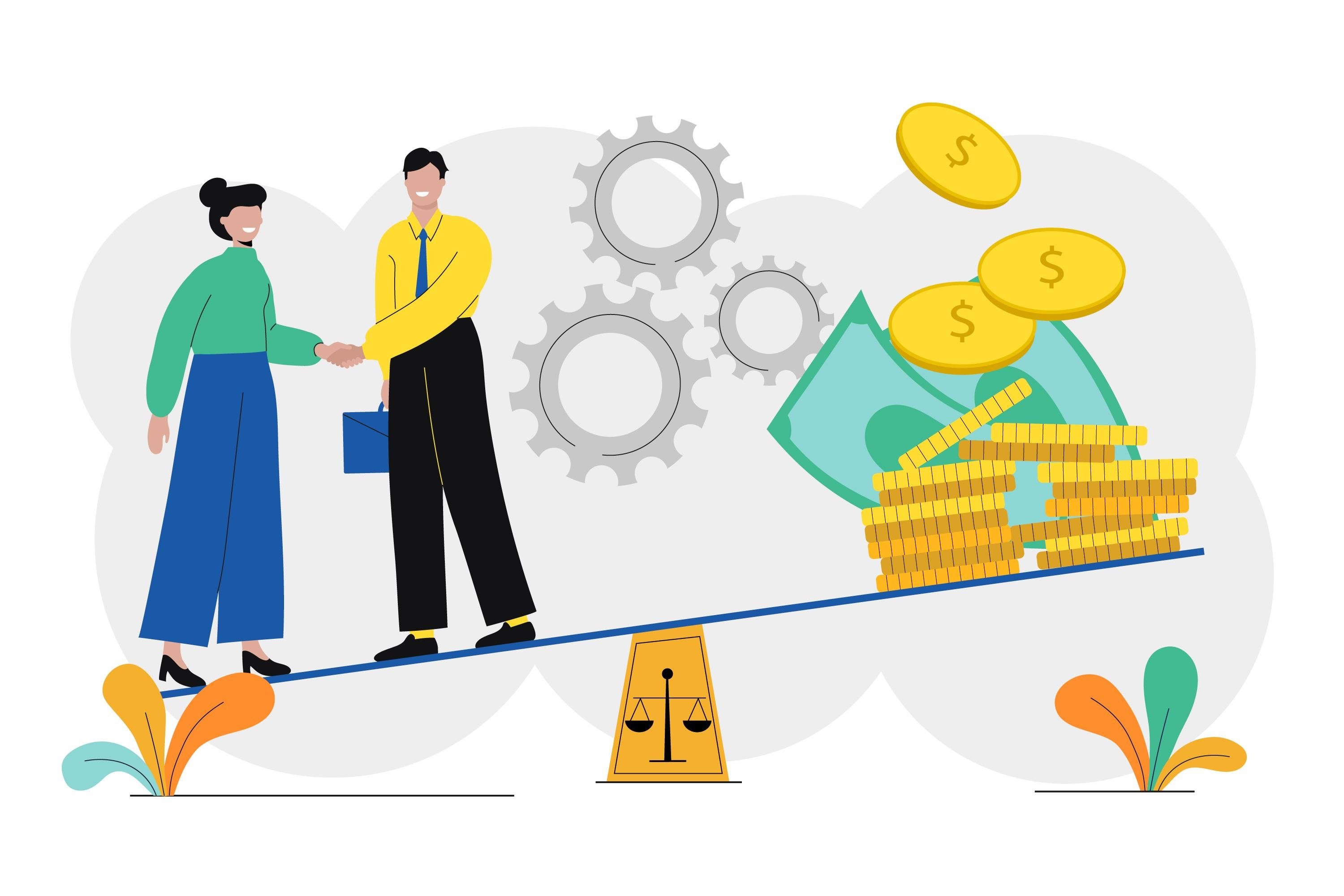
Opportunity Cost in Business: How Smart Financial Choices Drive Profitability
Every business owner makes hundreds of decisions every month — whether to invest in new technology, expand the team, or take on that next big client. But what separates good businesses from great ones is not just how many right decisions they make, but how well they evaluate the trade-offs behind each choice.
That’s where opportunity cost comes in — a concept that’s simple in theory but powerful in practice. Understanding opportunity cost helps entrepreneurs make smarter financial choices, use resources more efficiently, and ultimately improve profitability.
In simple terms, opportunity cost helps you understand what you give up when choosing one option over another. It’s not just about money spent—it’s about the potential profit, advantage, or efficiency lost by not selecting the next best alternative. Smart companies regularly analyze opportunity costs to make data-driven decisions that boost profitability.
This article explores practical examples of opportunity cost and how applying this concept can lead to smarter financial decisions—and stronger long-term results.
What Is Opportunity Cost? (And Why Does It Matter?)
Opportunity cost is the value of the next best alternative you give up when you make a decision.
In business terms, whenever you choose one option — like investing in marketing — you automatically give up the potential benefit of the next best use of that money, like upgrading equipment or hiring talent.
It’s not just about money — it’s about time, energy, and focus. Every decision comes with a cost, even the ones that seem “free.”
For example: If you spend $20,000 developing a new product, your opportunity cost might be the return you could have earned by investing that same $20,000 in an ad campaign that drives immediate sales.
Why Opportunity Cost Matters for Business Owners
Many business owners focus on direct expenses — rent, salaries, and production costs. But the hidden cost of missed opportunities often determines whether your business grows, stagnates, or declines.
Here’s why understanding opportunity cost is crucial:
Improved Financial Awareness: You stop looking at expenses in isolation and start evaluating them in terms of lost potential gains.
Better Decision-Making: You make choices based on long-term value, not short-term comfort or habit.
Smarter Investments: Capital, time, and effort are limited — opportunity cost ensures they’re used for the highest return.
Reduced Emotional Bias: It prevents impulsive decisions and helps you stay objective under pressure.
Real-World Examples of Opportunity Cost
Expanding vs. Optimizing
Imagine you own a profitable restaurant in Austin, Texas. You’re considering opening a second location in Dallas. The expansion sounds exciting — new market, new revenue stream. But it also requires significant investment, more staff, and management attention. Your opportunity cost? The growth you could have achieved by optimizing operations at your existing location — adding online delivery, improving customer experience, or increasing table turnover.
Takeaway: Sometimes, improving what already works yields higher returns than expanding too soon.
Buying vs. Leasing Equipment
A small construction firm is debating whether to buy heavy machinery or lease it.
• Buying gives ownership and long-term savings, but drains cash flow.
• Leasing keeps capital free but costs more over time.
If you buy, your opportunity cost might be the marketing campaign or hiring opportunity you can’t afford because cash is tied up. If you lease, your opportunity cost might be the ownership equity you miss out on.
Takeaway: Always calculate which option delivers the highest overall value — not just the lowest upfront cost.
Choosing Between Projects
A marketing agency has two project offers:
• Project A: $50,000 profit but occupies the entire team for two months.
• Project B: $35,000 profit, but allows the team to handle three smaller clients simultaneously.
Choosing Project A means losing potential profit and client relationships from other opportunities — that’s your opportunity cost.
Takeaway: Evaluate total profitability, not just the biggest individual contract.
Hiring vs. Outsourcing
A startup founder must decide between hiring a full-time accountant or outsourcing bookkeeping.
• Hiring gives control but adds overhead — salary, benefits, and time for training.
• Outsourcing reduces cost and frees up time to focus on core business growth.
If outsourcing lets you use your time for sales, networking, or strategy — your opportunity cost of hiring internally becomes much higher.
Takeaway: Opportunity cost includes time and focus, not just financial metrics.
How to Evaluate Opportunity Cost
Here’s a simple, practical framework:
List your options: Always consider multiple paths — don’t stop at the first idea.
Estimate returns: Identify the financial and non-financial benefits (like time saved or stress reduced) for each option.
Assess trade-offs: What will you lose by not choosing the alternative? Write it down — this makes the impact visible.
Use the formula: Opportunity Cost = (Return on Best Foregone Option) – (Return on Chosen Option)
Review decisions regularly: The best decision today might not be the best next year — markets, technology, and priorities evolve.
Opportunity Cost and Profitability
Ignoring opportunity cost can make a business look profitable but actually underperform in the long run.
When you consider opportunity cost:
You allocate capital where it earns the most.
You reduce wasted effort on low-return activities.
You make intentional, profit-driven decisions.
You view every expense as an investment choice, not just a cost.
By integrating opportunity cost into your thinking, you adopt a profit-first mindset — treating every dollar and every hour as a limited asset that must generate the best possible return.
Thinking Beyond the Visible Costs
Opportunity cost reminds us that the price of any decision is not only what we pay but also what we sacrifice. Every dollar, every hour, and every resource could be used in multiple ways—and the smartest financial leaders always seek the highest value use.
By recognizing opportunity costs in everyday business decisions, organizations can allocate resources strategically, improve profitability, and sustain long-term competitive advantage. The awareness of what you might be missing could be the key to what you stand to gain.
Summary
Opportunity cost is the hidden side of every business decision — the value of what you give up when you choose one path over another. For business owners, especially those managing tight budgets or competing priorities, recognizing opportunity cost leads to smarter investments, sharper strategy, and stronger profitability. The key is to evaluate every major decision — not just by what it costs, but by what it costs you not to choose. And if you’re ready to choose better financial paths, FinOpSys can support you every step of the way.

Cash Flow vs Profit: Why Your Business Can Be Profitable but Still Run Out of Cash

Malaysia e-Invoice 2026: A Complete Guide for Small Business Owners

Malaysia Payroll Compliance Guide 2026: EPF, SOCSO, EIS, PCB and Employer Tax Reporting

7 Payroll Mistakes That Can Cost Your Business Thousands

AI + Human Expertise: The Future of Financial Operations

AI-Powered Financial Insights: Transforming Accounting Data Into Business Intelligence
What Is Included in Professional Bookkeeping Services? A Complete Guide for Growing Businesses

From Receipts to Reports: How AI Turns Invoices, Bills, and Expenses Into Real-Time Insights
10 Smart Tax Planning Strategies for Small Businesses (2026)