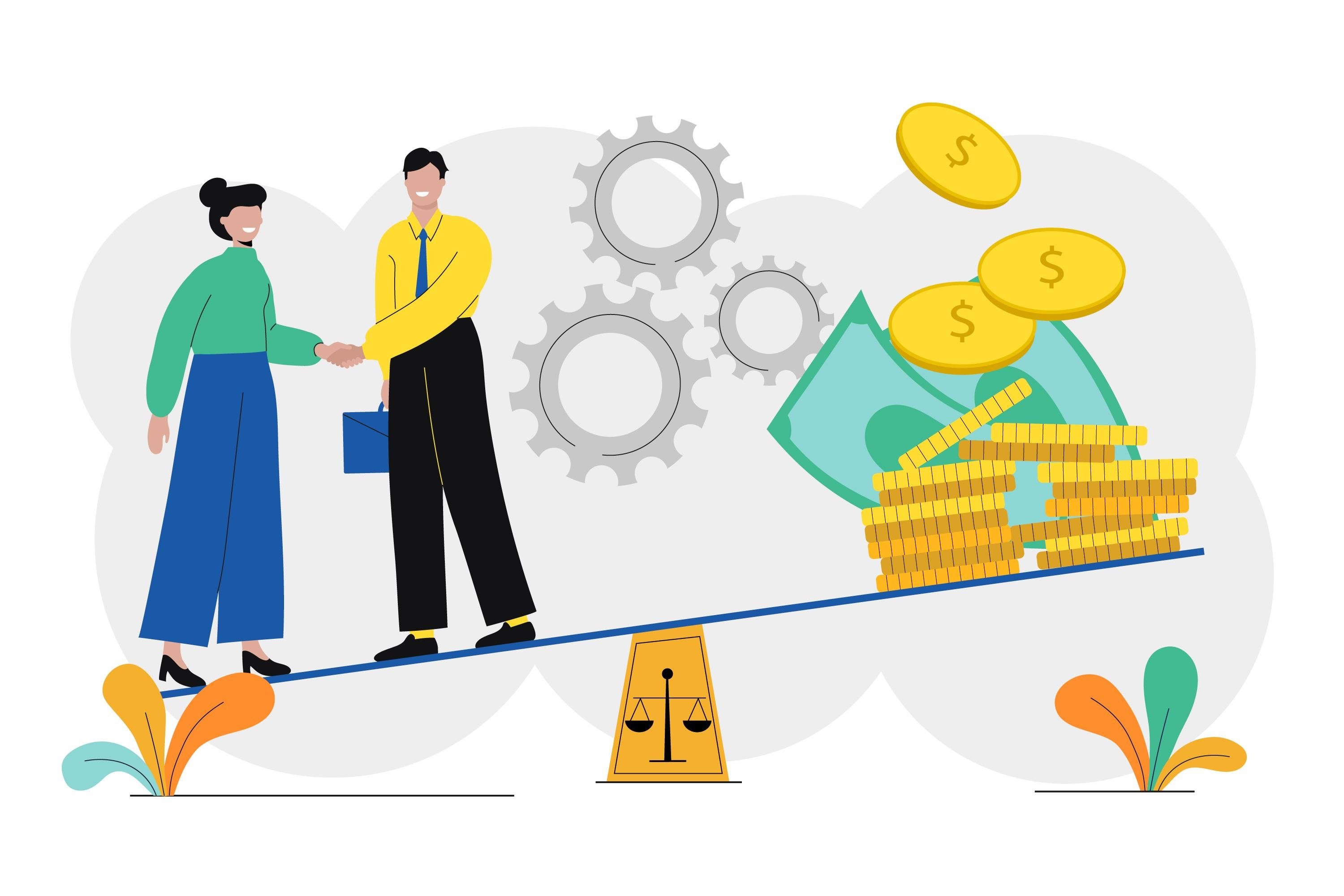
Cash Flow vs Profit: Why Your Business Can Be Profitable but Still Run Out of Cash
A business can have growing sales, healthy profit margins, and a positive income statement—and still struggle to make payroll next Friday.
It sounds contradictory, but it is one of the most important financial realities every business owner needs to understand:
Profit does not automatically mean cash in the bank.
Profit measures whether your business earned more revenue than it incurred in expenses during a particular period. Cash flow measures the actual movement of money into and out of your business.
The difference can become significant.
Federal Reserve Small Business Credit Survey data illustrates just how common cash-related pressure is. In its 2025 Report on Employer Firms, 51% of surveyed firms reported uneven cash flows as a financial challenge, while 56% reported difficulty paying operating expenses. In addition, 59% of firms sought new financing during the previous 12 months, and meeting operating expenses was the most common reason for seeking financing.
Understanding cash flow vs profit is therefore not simply an accounting exercise. It can determine whether a growing company has enough liquidity to continue operating.
What Is the Difference Between Profit and Cash Flow?
Profit appears on your income statement.
At its simplest:
Profit = Revenue − Expenses
If your company generates $120,000 in revenue and records $95,000 in expenses during a month, it reports a $25,000 profit.
But that number does not tell you whether all $120,000 has actually reached your bank account.
Under accrual accounting, revenue can generally be recognized when it is earned rather than when the cash is collected. The IRS similarly explains that under an accrual method, income is generally reported when earned and expenses when incurred.
That distinction creates one of the most common answers to the question:
Why is my business profitable but cash poor?
Your customers may owe you money that has already been recorded as revenue.
Cash flow, on the other hand, looks at money actually entering and leaving the business.
The SEC explains that a statement of cash flows tracks how an entity generates and spends cash and divides those movements into operating, investing, and financing activities.
That means a company can produce an accounting profit while its cash balance is moving in the opposite direction.
A Simple Example: Profitable on Paper, Short on Cash
Imagine your company reports the following results for the month:
Revenue: $120,000.
Expenses recognized on the income statement: $95,000.
Accounting profit: $25,000.
That looks healthy.
However, suppose only $75,000 of the $120,000 in revenue was actually collected during the month. The remaining $45,000 is sitting in accounts receivable.
Meanwhile, the business pays $82,000 in operating-related cash costs, spends $12,000 on equipment, and repays $8,000 of loan principal.
The simplified cash movement is now:
$75,000 cash collected − $82,000 operating cash payments − $12,000 equipment purchase − $8,000 loan principal = negative $27,000 cash movement.
The company made a $25,000 accounting profit but lost $27,000 of cash during the period.
This happens because the income statement and cash flow statement answer different questions.
Equipment purchases are typically treated differently from ordinary current-period operating expenses, and repayment of loan principal is a financing cash flow rather than an operating expense. The SEC's cash-flow guidance likewise separates operating activities from purchases of property and equipment and from borrowing or repayment activity.
This is why reviewing only your profit and loss statement can create a dangerously incomplete picture of financial health.
Why Profitable Businesses Run Out of Cash
There is rarely only one reason for a small business cash flow problem. More often, several factors combine.
1. Customers Pay Too Slowly
You make the sale today but receive the money 30, 45, 60, or even 90 days later.
Your income statement may recognize the revenue, but payroll, rent, insurance, software subscriptions, taxes, and suppliers still need to be paid.
The larger your accounts receivable balance becomes, the more cash becomes trapped between making the sale and collecting the money.
This is not a theoretical issue. Federal Reserve research based on the 2023 Small Business Credit Survey found that roughly four out of five small firms experienced payments-related challenges. The report also noted that slow-paying customers were particularly common challenges for firms in areas such as professional services, real estate, and manufacturing.
If you are searching for how to fix cash flow problems in a profitable business, accounts receivable is one of the first places to investigate.
2. Growth Consumes Working Capital
Rapid growth sounds like the solution to financial pressure, but growth can actually increase cash requirements.
Imagine receiving a large new order.
To fulfill it, you may need to buy inventory, increase labor hours, hire employees, pay contractors, increase advertising, or purchase additional equipment.
Those payments can happen weeks before the customer pays you.
Therefore, growing from $100,000 to $200,000 in monthly sales can temporarily make your cash position worse instead of better.
This is sometimes described as growing broke: the economics of the business may be attractive, but the company does not have sufficient working capital to finance the gap between paying its costs and collecting revenue.
3. Too Much Money Is Tied Up in Inventory
Inventory is an asset, but inventory sitting on a shelf is not cash available to pay employees.
Businesses can become cash poor by purchasing too much stock, carrying slow-moving products, or ordering inventory significantly earlier than necessary.
Every dollar unnecessarily locked in inventory reduces the cash available for another purpose.
A profitable retail, manufacturing, wholesale, or e-commerce business therefore needs to monitor not only gross margin but also how quickly inventory turns into sales and ultimately into collected cash.
4. Debt Payments Drain Cash
Borrowing can help finance expansion, equipment, inventory, or short-term operating requirements.
However, debt also creates future cash obligations.
Interest affects profitability, while principal repayments reduce cash without being treated the same way as operating expenses on the income statement. Financing activity therefore represents another reason cash flow and profit can move differently.
A company with strong EBITDA or net income can still experience liquidity pressure when substantial debt payments become due.
5. Large Capital Expenditures Require Cash
Buying equipment, vehicles, technology, machinery, or other long-term assets can require a substantial cash payment.
But accounting rules generally do not place the entire cost of a long-lived asset into the current period's operating expenses. Instead, the expenditure and its accounting treatment occur across different sections and periods of the financial statements.
The result?
You may see healthy profit at the same time your bank balance falls sharply after an investment.
6. Expenses Have to Be Paid Before Revenue Arrives
Many businesses operate with a timing mismatch.
Employees may be paid every two weeks. Vendors may require payment within 15 or 30 days. Customers may not pay for 45 or 60 days.
Even when every sale is profitable, that timing difference creates a working capital cash flow gap.
The larger the business becomes, the larger the dollar value of that gap can become.
How Much Cash Cushion Does a Business Need?
There is no universal number appropriate for every company. Cash requirements depend on payroll, fixed costs, customer concentration, payment terms, seasonality, industry volatility, access to financing, and other factors.
Historical JPMorgan Chase Institute research shows why maintaining liquidity deserves attention.
Using more than 470 million transactions from 597,000 small businesses, the Institute found that the median small business in its dataset held enough cash to cover only 27 days of typical outflows. Twenty-five percent held fewer than 13 cash-buffer days, while the top 25% held more than 62 days.
The study used transaction data from 2015, so those figures should not be interpreted as a current universal benchmark. They do, however, demonstrate how limited the cash cushion can be for many small businesses.
The right question is not simply, “How much profit did we make?”
It is:
If customer payments stopped or slowed tomorrow, how long could we continue paying our normal obligations?
How to Improve Cash Flow Without Increasing Sales
When a business has cash flow problems, the instinctive response is often: “We need more sales.”
Sometimes that is true.
But increasing sales can actually make the problem worse if every new sale requires cash upfront and customers pay slowly.
A better business cash flow management strategy starts with understanding where money is getting stuck.
Consider focusing on one coordinated set of actions:
Speed up accounts receivable. Invoice immediately, establish clear payment terms, follow up consistently on overdue accounts, make electronic payment easy, and consider deposits or milestone billing where appropriate.
Build a rolling cash flow forecast. A 13-week cash forecast can show expected receipts, payroll, vendor payments, taxes, debt obligations, and other significant cash movements before they become emergencies.
Review inventory levels. Identify slow-moving stock, excess purchasing, and products tying up disproportionate amounts of working capital.
Match payment timing where possible. Negotiate reasonable supplier terms so major payments more closely align with customer collections.
Monitor upcoming tax and debt obligations. These should appear in your forecast before the payment date, not become surprises when cash leaves the account.
Separate growth from liquidity. Before accepting rapid expansion, estimate how much additional working capital the growth will require.
Maintain an appropriate cash reserve or financing capacity. A liquidity buffer can provide time to react when customer payments slow or unexpected expenses occur.
These steps address one of the most overlooked aspects of cash flow management for small businesses: timing.
A healthy company does not simply generate revenue. It converts revenue into usable cash efficiently enough to meet its obligations.
Metrics That Can Warn You About Cash Flow Problems
You do not need dozens of financial KPIs.
Start by regularly monitoring cash balance, accounts receivable, accounts payable, inventory, operating cash flow, upcoming obligations, and expected collections.
For businesses that invoice customers, Days Sales Outstanding (DSO) can help indicate how quickly receivables are being collected.
For inventory businesses, inventory turnover and days inventory outstanding can highlight how long cash remains tied up in stock.
You can also monitor working capital and calculate your approximate cash runway:
Cash Runway = Available Cash ÷ Average Cash Outflow
The most useful metric, however, is often the forecast itself.
Historical financial statements tell you what happened.
A reliable cash forecast helps you decide what to do next.
Cash Flow Forecasting Turns a Surprise Into a Decision
Suppose your forecast shows that the business will fall $40,000 short six weeks from today.
That is a problem—but it is a manageable problem.
You have six weeks to accelerate collections, delay a nonessential purchase, negotiate vendor timing, adjust spending, arrange appropriate financing, or change the timing of an investment.
Now imagine discovering the same $40,000 shortage two days before payroll.
The financial problem is identical.
Your available options are not.
That is why cash flow forecasting for a small business is less about predicting every dollar perfectly and more about creating enough visibility to make decisions earlier.
Profitability Still Matters—But It Is Only Part of the Story
None of this means profit is unimportant.
A business that consistently spends more to deliver its products or services than it earns will eventually have a fundamental economic problem.
Profitability tells you whether your business model is creating economic value.
Cash flow tells you whether you have enough liquidity to keep operating while that value is being created.
Successful financial management requires both.
Think of profit as the scorecard for economic performance and cash as the fuel that keeps the company operating.
You can have a winning score on paper and still stop moving if the fuel tank reaches zero.
People Also Ask About Cash Flow vs Profit
Can a profitable business have negative cash flow?
Yes. A profitable company can have negative cash flow when revenue has been recognized but not collected, inventory purchases consume cash, customers pay slowly, equipment is purchased, debt principal is repaid, or other cash outflows occur. Profit and cash flow measure different aspects of financial performance.
Why do I have profit but no money in my business bank account?
Your profit may be tied up in accounts receivable or inventory, or your cash may have been used for debt repayments, equipment purchases, taxes, owner distributions, or other obligations. Start by comparing your income statement with your balance sheet and cash flow statement rather than reviewing profit alone.
Which is more important: cash flow or profit?
Both are essential. Profit indicates whether the underlying business model is economically sustainable, while cash flow indicates whether the business has enough liquid money to meet obligations. A company generally needs long-term profitability and sufficient short-term liquidity.
How can a small business solve cash flow problems?
Start by creating a short-term cash forecast, accelerating customer collections, reviewing overdue invoices, managing inventory, planning taxes and debt payments, controlling unnecessary spending, and evaluating the timing of supplier payments. The goal is to identify the specific source of the cash gap instead of treating every cash shortage as a sales problem.
Does increasing sales always improve cash flow?
No. Higher sales can initially consume cash when a company must pay employees, suppliers, contractors, or inventory costs before receiving customer payments. Rapid growth without sufficient working capital can therefore create a cash shortage even when every new sale is profitable.
What is the difference between revenue, profit, and cash flow?
Revenue is the amount generated from selling goods or services. Profit is what remains after applicable expenses are deducted from revenue. Cash flow measures actual cash moving into and out of the business. A company can therefore have high revenue, positive profit, and negative cash flow at the same time.
Final Takeaway: Don't Manage Your Business From the P&L Alone
One of the most dangerous financial assumptions a business owner can make is:
“We're profitable, so our cash position must be fine.”
The numbers do not work that way.
Accounts receivable, payment delays, inventory, debt repayments, capital expenditures, rapid growth, and mismatched payment terms can all separate accounting profit from available cash.
Recent Federal Reserve survey findings reinforce that this is a widespread operating issue: more than half of employer firms surveyed reported paying operating expenses or uneven cash flow as financial challenges.
The solution is better financial visibility.
Monitor profitability, but also understand where cash is located, when it will arrive, what obligations are approaching, and how much liquidity your company will need over the coming weeks and months.
Profit shows whether the business is working. Cash determines whether the business can keep working.
Turn Better Financial Visibility Into Better Business Decisions With FinOpSys
Knowing that profit and cash flow are different is the first step. Building a financial operating system that gives you clear, timely information is what turns that knowledge into action.
If you're dealing with cash flow problems despite being profitable, uncertain working-capital needs, unpredictable collections, or limited visibility into future cash requirements, FinOpSys can help you move from reacting to financial surprises to making informed decisions with greater confidence.
Don't wait until a profitable business becomes a cash-strapped business. Connect with FinOpSy
s today and start building clearer financial visibility for the decisions ahead.
Related Financial Guides
Continue building a stronger financial operating system with these practical FinOpSys guides:
Cash Flow vs Profit: Why Your Business Can Be Profitable but Still Run Out of Cash

Malaysia e-Invoice 2026: A Complete Guide for Small Business Owners

Malaysia Payroll Compliance Guide 2026: EPF, SOCSO, EIS, PCB and Employer Tax Reporting

7 Payroll Mistakes That Can Cost Your Business Thousands

AI + Human Expertise: The Future of Financial Operations

AI-Powered Financial Insights: Transforming Accounting Data Into Business Intelligence
What Is Included in Professional Bookkeeping Services? A Complete Guide for Growing Businesses

From Receipts to Reports: How AI Turns Invoices, Bills, and Expenses Into Real-Time Insights
10 Smart Tax Planning Strategies for Small Businesses (2026)